Video game music has grown from a few beeping tones into full orchestral scores performed by live orchestras, and you can hear that whole journey in the way a single track gets made. In this post you’ll learn how game music evolved from early sound chips to adaptive interactive scores, and how to get your music placed in video games. We’ll go behind the scenes with producer Neil Thompson, aka Dr. Perceptron, who had three of his electronic tracks placed on the Mass Effect: Andromeda soundtrack, produced in Reason.
What Is Video Game Music?
Video game music is the soundtrack that accompanies video games. The term covers any music heard in a game, from title screens and menus to the score playing under the action. It spans nearly every style you can name, including chiptune, orchestral, electronic, rock, and ambient. What unites these pieces is not a genre but a purpose. The music exists to support play, set a mood, and react to what you’re doing on screen.
How Video Game Music Is Made
The story of how video game music is made starts with hardware limits. Early game music was synthesized directly on simple sound chips, and those constraints gave rise to the distinctive chiptune sound. With only a few voices to work with, composers wrote tight, memorable melodies around what the hardware could play.
As the technology improved, so did the palette. FM synthesis brought richer, more expressive synthesizer voices, and each new generation of consoles and arcade boards pushed sound design further. The bigger leap came with CD-ROM, which let games play back pre-recorded audio and move toward fully orchestral scores instead of synthesized approximations.
The real difference between game music and film or album music is interactivity. A game score is written in adaptive, modular chunks that loop and re-sequence to match play. A film score follows a fixed timeline, but a game score has to respond to a player who might linger in one room for thirty seconds or thirty minutes. Music that bends around the action is what sets video game music apart.
Game music has earned real recognition for its craft. It is taken seriously as an art form, performed by orchestras in concert halls and taught in music schools around the world.
A game’s music also comes from two paths. Some of it is an original score written by a composer for that title, and some of it is tracks by independent artists that get licensed or placed onto the game’s soundtrack. The second path is how a lot of producers first hear their music in a game.
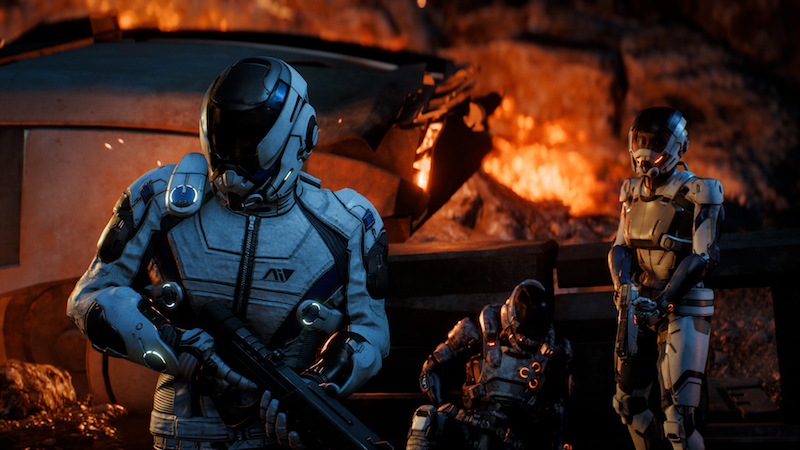
How Neil Thompson’s Tracks Landed in Mass Effect: Andromeda
Edmonton-based producer Neil Thompson, aka Dr. Perceptron, has been writing and recording electronic music since the early nineties. Initially from the UK, he has been in the arts discipline of the computer games industry since the late eighties, with companies such as Psygnosis, Sony, Bizarre Creations and now BioWare in Canada. He continues to actively pursue his twin passions of art and electronica, submitting music for games as well as releasing his own albums via Soundcloud and Bandcamp.
We got a chance to speak with Neil about how he approached creating music for Mass Effect: Andromeda with Reason.
You are one of a handful of Edmonton producers who’ve gotten track placements in the Mass Effect game by BioWare. Tell us a little bit about your background and how you got into producing music for Mass Effect.
I’ve been in the games industry for a long time, but not for as long as I’ve been a keen amateur musician! I come from a musical family and after brief attempts at learning “traditional” orchestral instruments, I discovered the electric guitar and that was the end of any formal training. The move to electronic music came during the rise of the dance / rave scene in the late 80’s and early 90’s when my love for the older school of artists like Tangerine Dream, Vangelis and Kraftwerk started to combine with artists like The Orb, DJs like Sasha, John Digweed and CJ Bolland in particular, whose album “Electronic Highway” defined the convergence of European techno and pure electronica. Then Pete Namlook’s explorations into electronic sound and his many collaborations (particularly with Klaus Schulze) were a huge inspiration.
When it became easier to self release work through sites like Soundcloud, I started to put stuff out more aggressively and several years ago the then EP of Mass Effect, Casey Hudson, heard a couple of my tracks (“The Sheep Look Up” and “The Jagged Orbit” from “The Brunner Sessions” album) and tweeted how reminiscent they were of the Mass Effect universe. Fast forward a few years and BioWare are working on a new Mass Effect title and I was approached by Jeremie Voillot and Mike Kent (the audio directors) to submit three tracks for the game’s soundtrack and I was only too pleased to do it!
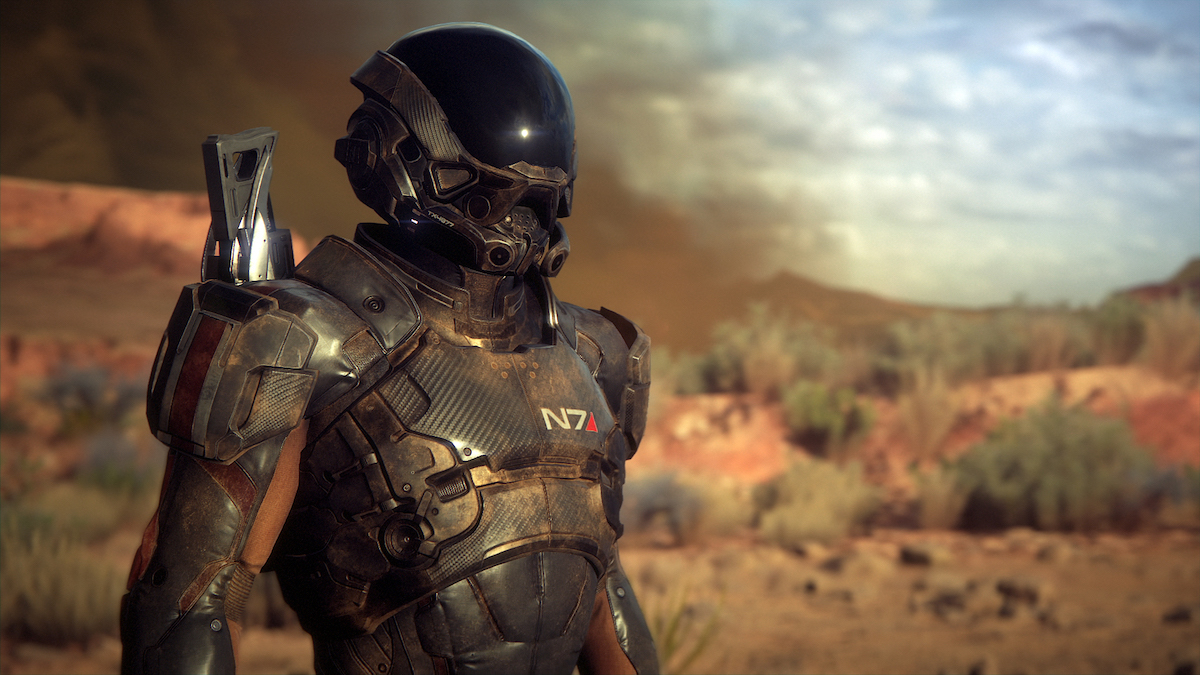
At the time of creating your music for Mass Effect, did you already know your songs were going to be in the game, and if you did, did that affect your writing in any way?
Originally, I was considering submitting some existing tracks, but with an opportunity like this I realized that it was a great chance to write some music specifically with the intent of capturing some of the mood of the game.
It’s a really interesting story line with a great antagonist that lends itself well to a musical interpretation: anything sci-fi is fun to interpret as it lends itself perfectly to the kind of avant garde electronic sounds that I love to make!
Do you have a favorite Reason production trick you can tell us about?
Not much of a trick, but more a rethink of my technique: I got really into modular synthesis a few years ago and now have a pretty large eurorack set up. It made me change the way I thought about using the modules in reason: I now do far more work using standalone LFOs (Pulsar mainly) to drive the oscillators independently of the matrix or the sequencer. It gives an unpredictable and more organic feel to instruments such as Parsec where you can drive the modifiers and filters all independently… Plenty of happy accidents to be had with this approach!
What are your top three favorite Reason devices, and how do you use them?
Thor is fantastic and still a constant source of inspiration: I love huge sweeping tones and Thor has that in abundance.
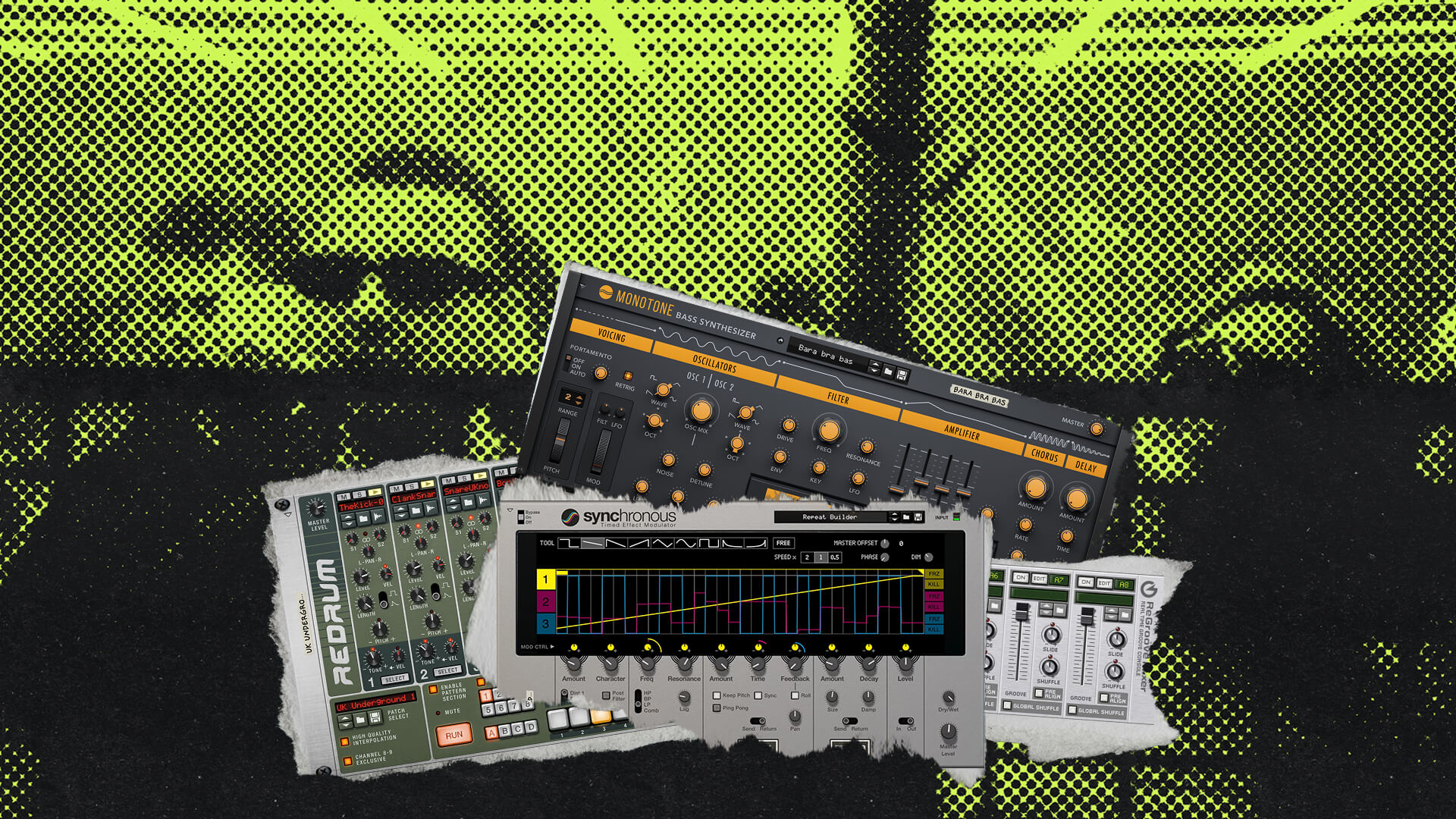
Synchronous is my go to effect as I like to use a lot of filtering and glitch type effects. The graphical interface makes it a great tool to mess with and see what comes out.
Kong partnered with the Propulsion Drum Sequencer by Lectric Panda I find to be an immensely powerful combination. All my percussion tracks begin with this set up.
What’s your favorite Reason feature?
I do like the new Players, particularly the Dual Arpeggio but the Pitch Edit has proved to be most useful so far. I use it to correct vocal tracks and it’s really easy and really fast.
Do you have a favorite game soundtrack?
I’ve always admired the work of Richard Jacques and it was quite the honour to meet and work with him on a game we did at Bizarre Creations called “James Bond: Bloodstone”. Richard’s score for that game was tremendous! Very Bond.
If you asked me to name my favourite soundtrack in any medium, it has to be “Blade Runner” by Vangelis… It still gives me chills when I listen to it today and I’ve spent a lot of time in Reason trying to recreate the sound of his CS-80… with some success.
How to Get Your Music into a Video Game
Neil Thompson’s tracks reached Mass Effect: Andromeda for a simple reason: he self-released his music online through SoundCloud and Bandcamp, and an audio director happened to hear it. Being discoverable still helps. But hoping to be stumbled upon is not a reliable plan today, and video game sync is growing and increasingly accessible to independent artists in 2026. There is no single standard submission portal for indie game audio, so studios often approach artists directly.
Get Your Music Released and Discoverable
Start by getting your music released and out in the world, so it is easy for audio directors to find. Own your music so you can actually license it, and submit through sync licensing platforms that let independent artists pitch tracks for placement. When the track fits, an independent artist can compete with a major one. Strong placements start with strong sound design, and that starts in the Rack.
Getting placed starts with getting your music heard. Distribution is included in your Reason+ subscription, so you can start releasing your tracks now and put them in front of the people who place music in games. Get your sound out into the world today.
Pitch Audio Directors Directly
When you pitch audio directors directly, keep it short and relevant. Research the games they’ve worked on, then send a brief email that shows you understand their sound. Include two or three tracks that match the mood of their recent projects, with streaming links they can click immediately. Mention why your music fits their aesthetic, not why you need the placement. Audio directors hear hundreds of pitches, so make yours easy to evaluate in under two minutes. If your sound aligns with what they’re building, they’ll reach out.
How Much Can You Earn Licensing Music to Video Games?
When it comes to payment, fees vary widely by placement type and studio size. Here’s what you can typically expect:
| Placement Type | Typical Fee Range | Notes |
|---|---|---|
| Indie game (small studio) | $100 to $1,000 | Often negotiable. Sometimes credit-only for game jam projects. |
| Mid-tier game (established indie) | $1,000 to $5,000 | Realistic target for quality placements. |
| AAA game (in-game) | $5,000 to $25,000 | Major label catalogs dominate at this level. |
| Game trailer (major release) | $10,000 to $100,000+ | Trailer sync pays premium rates. |
| Mobile game | $50 to $2,000 | High volume, low per-placement fees. |
Source: Orphiq – How to License Music to Video Games
Conclusion
Video game music went from simple chip melodies to full orchestral scores, and the through-line is craft: composers and producers shaping sound to fit the play. What you heard from Neil Thompson is that craft up close, standalone LFOs driving oscillators, Thor sweeping across a track, Kong laying down percussion, all built by hand in the Reason Rack. The devices he leaned on are still here in Reason 14, waiting for you to wire them together your own way. If a sci-fi mood or a glitchy, cinematic sound is calling to you, the best next step is to open the Rack and start experimenting. Chase the happy accidents, and see what your own game-inspired sound turns into.
Ready to get your music into the game?
Frequently Asked Questions
What makes video game music different from other music?
Interactivity. A game’s music is written in adaptive, modular chunks that loop or re-sequence to match what’s happening on screen. A film score runs on a fixed timeline, while a game score bends around a player’s choices and timing.
How is video game music made?
Today, game music is built in digital audio workstations using a mix of software instruments, sample libraries, and effects. Producers wire together synths, samplers, and processors to craft adaptive scores that respond to gameplay. The process is modular: composers create looping stems and layered variations that the game engine can trigger and blend in real time. Tools like Reason let you build those sounds from the ground up in the Rack, as Neil Thompson did for his Mass Effect: Andromeda tracks, using devices like Thor, Synchronous, and Kong to shape everything from sweeping tones to glitchy percussion.
How do you get your music into a video game?
Keep your music discoverable and your rights in order, then take the deliberate routes. Submit through sync licensing platforms, and pitch audio directors and music supervisors directly, since there is no single portal for indie game audio.
Can independent artists get their music placed in games?
Yes. When the music fits, independent artists can compete with major ones, which is how Neil Thompson’s tracks reached the Mass Effect: Andromeda soundtrack.
How Much Money Can You Make Licensing Tracks to Video Games?
It varies by project and studio. Mobile games often pay $50 to $2,000 per track, while indie games typically pay $100 to $1,000. AAA in-game placements can reach $5,000 to $25,000, and major game trailers pay premium rates from $10,000 to over $100,000.